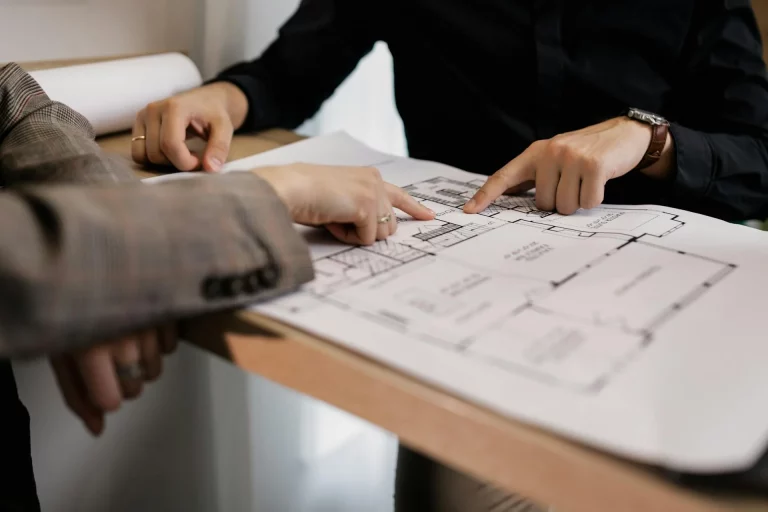

The libro del edificio (building manual) is the documentation on the works as built, which the architect directing the works hands to the developer at completion: the design with its changes, the acta de recepción (handover record), the parties who took part, and the instructions for use and maintenance. It is governed by article 7 of Law 38/1999.
In the Madrid region there are three regional rules of its own that make it more demanding than in the rest of Spain, and that almost no page explains. Without depositing it at the town hall (ayuntamiento) there is no first occupancy, and without producing it at the Land Registry (Registro de la Propiedad) the new build cannot be registered.
What it is and what the law says
The LOE does not use that name in the body of the article. It speaks of documentación de la obra ejecutada (documentation on the works as executed) and only at the end of article 7 says that this set of documents “shall constitute the libro del edificio” and “shall be delivered to the end users of the building”.
The Código Técnico de la Edificación (the Spanish Building Code, CTE) completes it in article 8.1: to the LOE contents are added the reception documentation for products, equipment and systems under article 7.2 — CE marking, manufacturers’ warranties, tests, quality marks — and the instructions for the use and maintenance of the finished building.
What it has to contain
The national minimum
- The detailed design with the approved changes, that is, what was actually built
- The acta de recepción, the record of handover of the works
- The list identifying every party that took part
- The instructions for the use and maintenance of the building and its services
- The documentation on products, equipment and systems: CE marking, manufacturers’ warranties, tests and quality marks
And in the Comunidad de Madrid, on top of that
Article 13 of Law 2/1999 on Measures for Building Quality requires the dirección facultativa (the site supervision team) to include as well:
- The significant entries in the libro de órdenes, asistencias e incidencias, the order book kept on site
- The drawings and documents of what was actually built, the list of firms and professionals involved, and the quality tests required
- The rules for use, care and maintenance, completed by the dirección facultativa and by the suppliers
- The specifications of the materials and the warranties of builders and suppliers
- The instructions on what to do in the event of an accident or an emergency
Decree 349/1999 also fixes its structure: two volumes as a minimum and four parts — characteristics of the building, rules for use and maintenance, response to accidents and a register of documents. And the Order of 17 May 2000 goes as far as standardising the physical format: A4 portrait, binding that opens flat to 180 degrees, matt coated paper of at least 170 grams and ten-point type as a minimum.
Why this matters. A libro del edificio drawn up to the national minimum is incomplete in Madrid. And article 27.c of Law 2/1999 classifies as a serious infringement “the formation of the libro del edificio without complying with the contents prescribed in this Law”.
Who produces it and who it is handed to
| Who | What falls to them | Rule |
|---|---|---|
| Architect directing the works | Produce and sign the documentation on the works as executed, with the required visados (professional association approval stamps) | Art. 12.3.f LOE |
| Aparejador (building engineer directing the execution) | Collaborate by supplying the results of the control work carried out | Art. 13.2.f LOE |
| Site supervision team | In Madrid, form it jointly and deposit it at the town hall, under the responsibility of the lead supervisor | Arts. 13 and 14.1 Law 2/1999 |
| Developer | Hand it to the buyer, if there is one | Art. 9.2.e LOE |
| Owner | Receive it, keep it, update it and pass it on | Art. 16.1 LOE |
The two walls it puts up if it is missing
There is no first occupancy
Article 14.4 of Law 2/1999 is literal: “No licences of first occupancy, or any other document prescribed for that purpose by the rules in force, shall be granted unless it is on record that the Libro del Edificio has been deposited at the corresponding Ayuntamiento”.
Without first occupancy there are no permanent utility supplies and no lawful occupation.
The new build cannot be registered
Since 1 November 2015, article 202 of the Mortgage Act (Ley Hipotecaria) requires it to be produced “for filing at the registry”.
The Directorate General has ruled three times that this applies to detached houses and to self-build too: the deposit cannot be waived. Without registration there is no mortgage and no orderly sale.
And the penalties, in Madrid
| Conduct | Classification | Fine |
|---|---|---|
| Not producing the libro del edificio | Very serious (art. 26.d) | €60,101–150,253 |
| Forming it without complying with the prescribed contents | Serious (art. 27.c) | €30,051–60,101 |
| Not depositing it as required by article 14 | Serious (art. 27.d) | €30,051–60,101 |
| Not updating it, where no third party is harmed | Minor (art. 28.b) | €6,010–30,051 |
A point of honesty. The amounts come from converting into euros the original text of Law 2/1999, which was published in pesetas, and the consolidated text records no later amendment. The infringement types are verified article by article. Before using these figures in a real argument, check that they are still in force.
Not to be confused with the libro del edificio existente (existing building manual)
| Libro del edificio | Libro del edificio existente | |
|---|---|---|
| Rule | Art. 7 LOE + CTE + the Madrid rules | Royal Decree 853/2021 |
| What it is | A legal duty within the building process | A requirement for applying for a refurbishment grant |
| Which buildings | New build | Residential, completed before the year 2000 |
| What it contains | The documentation on what was built | A survey of condition, improvement potential and a plan of works |
If you are building now, the one that applies to you is the first. The second does not apply to you.
When to talk about this
When you sign the engagement letter, not when the works finish. The libro del edificio is a duty of the director de obra under article 12.3.f of the LOE, and it is worth having it itemised in the engagement from the start. Turning up as a new item in the final month is the commonest way for it to end in an argument.
Frequently asked questions
Is the libro del edificio compulsory for a single detached house?
Yes. Article 7 of the LOE draws no distinction by type of developer or by use, and in the Madrid region Law 2/1999 applies to every building in public or private ownership, with no exception for self-build.
I am building for myself and I am not going to sell. Does it still apply?
It does. What changes is who it is handed to, not the obligation. In Madrid the deposit at the town hall is required “in all cases” (article 14.1 of Law 2/1999) and is a condition for first occupancy. And the Dirección General de Seguridad Jurídica y Fe Pública has expressly rejected the idea that self-build exempts you from the registry deposit.
Who produces it and who signs it?
It is drawn up and signed by the director de obra, that is, the architect (article 12.3.f of the LOE). The director of the execution of the works collaborates by supplying the results of the control of materials and workmanship (article 13.3.f). In Madrid, Law 2/1999 assigns it to the dirección facultativa as a whole.
What happens if I do not do it?
Three things, in a chain. First occupancy is not granted, because article 14.4 of Law 2/1999 expressly prohibits it. The completed building is not registered, because article 202 of the Mortgage Act requires it to be produced for filing at the registry. And in Madrid failing to produce it is classified as a very serious infringement.
How much does it cost?
There is no published, reliable market price, and professional associations have been barred from issuing indicative fee scales since Law 7/1997. The figure is not the point: what matters is that it is included and itemised in the site supervision engagement letter from the start. Invoicing it separately at the end is a common source of conflict.
Is it the same as the libro del edificio existente?
No. The libro del edificio existente is governed by Royal Decree 853/2021 and is a requirement for accessing a refurbishment grant, not a general obligation. It applies to residential buildings completed before the year 2000. If you are building now, the one that applies to you is the one in article 7 of the LOE.
Does it have to be updated if I carry out alterations?
Yes. Article 14.3 of Law 2/1999 requires both copies — the town hall’s and the owner’s — to be updated with later works of extension, alteration, refurbishment or work on common elements.
What if I buy a house and the seller does not have it?
The owner must receive, keep and pass on the documentation on the works as executed (article 16.1 of the LOE), and in Madrid the deed must state that it has been made available to the buyer (article 19 of Law 2/1999). Without it you lose the maintenance instructions, the manufacturers’ warranties and the drawings of what was actually built.
We hand it over complete, and to the Madrid rules
We form the libro del edificio in accordance with Law 2/1999, Decree 349/1999 and the Order of 2000, we deposit it at the town hall and we leave it ready for filing at the registry. And it is itemised in the engagement letter from day one.