In recent years, passive houses have become one of the most demanded options in the construction of single-family homes in Spain. More and more people are looking for an efficient, comfortable house with almost zero energy consumption, and this is where prefabricated passive houses and the Passivhaus standard come into play.
From Fran Cortés ArchitectsFran Cortés Arquitectos, architecture studio specialized in design and construction of single-family houses, new construction y prefabricated concrete housesWe explain in detail what is a passive house or passivhaus, what are its real benefits and how much it costs to build a passive house in Spain.
What are Passive Houses or Passivhaus?
Passive houses, also known as Passivhaus houses, are homes designed and built under an international standard born in Germany whose main objective is to minimize energy consumption without sacrificing comfort.
Unlike a conventional house, a passive house maintains a stable indoor temperature throughout the year thanks to its design, orientation and construction systems, reducing energy consumption by up to 90%.
This concept applies to a detached single-family house, a semi-detached single-family house or even a prefabricated single-family house.
Basic characteristics of passive houses
For a house to be considered Passivhaus, it must comply with a series of very specific technical principles:
1. High-performance thermal insulation
Prefabricated concrete passive houses stand out especially in this point, since concrete offers high thermal inertia, helping to maintain a constant interior temperature.
2. Elimination of thermal bridges
In the construction of passive houses, care is taken at all construction joints to avoid heat or cold losses.
3. High-performance carpentry
Triple-glazed windows and doors with highly efficient frames.
4. Air tightness
The housing envelope must be completely watertight to avoid uncontrolled leaks.
5. Mechanical ventilation with heat recovery
One of the key systems of passive houses, which allows to renew the indoor air without losing energy.
Prefabricated passive houses: an option on the rise
More and more customers are interested in prefabricated passive houses, as they combine energy efficiency, speed of execution and cost control.
In our studio we are especially committed to prefabricated concrete passive houses, an ideal solution for those who are looking for:
- High energy efficiency
- Durability and low maintenance
- Contemporary and customizable design
- Accuracy in project execution
The prefabricated single-family houses allow the Passivhaus standard to be applied with great accuracy, reducing on-site errors and improving the final result.
Benefits of passive houses
Building a passive house is not only a matter of savings, but of quality of life.
- Energy and economic savings: A passivhaus house drastically reduces heating and cooling costs.
- Thermal comfort all year round: Stable temperature in winter and summer, without drafts or cold areas.
- Healthy indoor air: Thanks to controlled ventilation, indoor air is always clean and free of pollutants.
- Sustainability and energy efficiency: Efficient houses reduce the carbon footprint and are committed to responsible housing construction.
- Higher home value: A passive house has a higher market value and a better energy rating.
How much does a passive house cost in Spain?
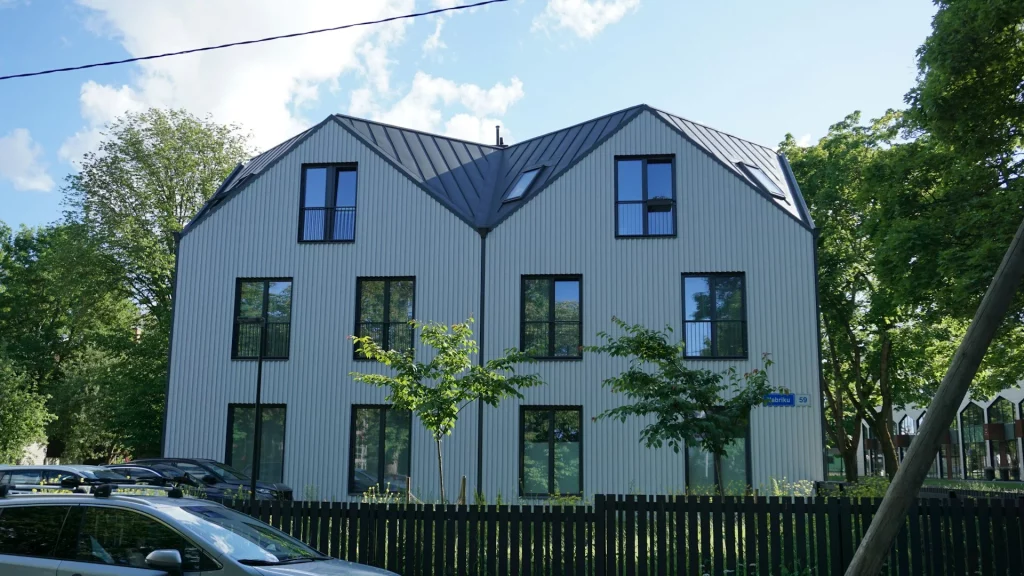
One of the most common questions is the price. The cost of a prefabricated passive house in Spain depends on several factors:
- Living area.
- Type of single-family house project.
- Construction system (traditional or prefabricated).
- Finishing level.
- Location and urban planning regulations.
Indicative prices
- Traditional passive house: from 1,600 – 2,200 €/m².
- Prefabricated concrete passive house: from 1,500 – 2,000 €/m².
Although the initial investment may be slightly higher, the energy savings in the medium and long term more than offset the cost.
Design and construction of passive houses
The success of a passive house depends largely on the initial design. That is why it is essential to have a single-family house architect specialized in passivhaus.
At Fran Cortés Arquitectos we approach each new construction project in a comprehensive manner:
- Custom architectural design.
- Energy optimization from the first sketch.
- Complete project management of a single-family house.
- Construction of single-family and prefabricated concrete houses.
- Technical control and energy certification
We design both detached passive houses and semi-detached houses, adapting to each client and plot.
Thinking about building a passive house?
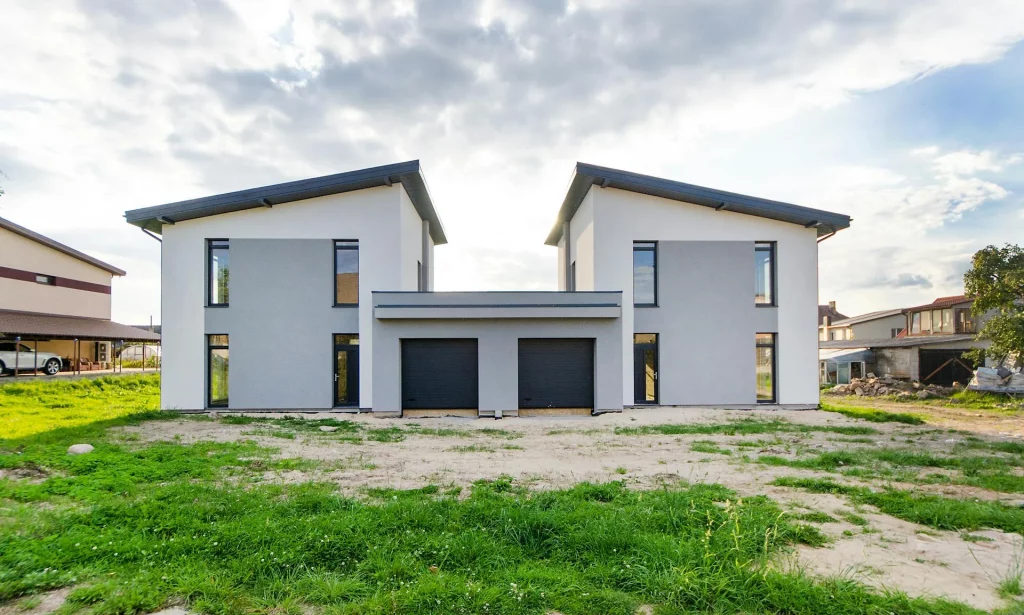
If you are looking for an architectural firm specializing in prefabricated passive houses, new construction and construction of single-family homes, in Fran Cortés Arquitectos we accompany you throughout the process, from design to delivery of your home.
Contact us at and tell us about your dream home.
Frequently Asked Questions
1. What is the difference between a passive house and a conventional house?
A passive house consumes up to 90% less energy and offers greater comfort and air quality.
Are prefabricated passive houses customizable?
Yes, prefabricated passivhaus houses allow fully customized designs.
Does a passive house need heating?
Yes, but minimally. In many cases it is covered by very efficient systems or renewable energy.
Is a passive house more expensive?
The initial investment is somewhat higher, but the energy savings pay off in the short and medium term.
5. Are passive houses suitable for any area of Spain?
Yes, the Passivhaus standard can be adapted to any climate: coastal, inland, north or south. The bioclimatic design is adjusted to each region to ensure maximum efficiency.