As an architectural firm in Madrid with years of experience designing and building homes in Madrid, both new construction and renovations and prefabricated concrete houses, we know that beyond the beautiful design there is a legal basis that all housing must meet: the minimum conditions of habitability.
These conditions are not designed to hinder, but to ensure that the spaces in which we live are healthy, functional and safe. In this article we will explain what is required, how it affects the design of a home and why it is important to know these standards before building, renovating, buying or renting.
What are the minimum habitability conditions?
When we talk about minimum habitability conditions, we refer to a set of technical, hygienic-sanitary and urban planning requirements that a dwelling must meet in order to be used as such. They are mainly collected in two areas:
- State regulations, such as the Technical Building Code (Código Técnico de la Edificación, CTE) and the Order of February 29, 1944, which set basic requirements on ventilation, natural lighting, waterproofing levels, installations and clear heights (the latter, for example, cannot be less than 2.50 m in main rooms).
- The municipal regulations of Madrid, especially the Urban Development Regulations of the General Urban Development Plan of Madrid (PGOUM) which establish more specific criteria for surface area, distribution and facades for housing in Madrid.
These rules serve to ensure that housing in Madrid is not just a shelter for people, but a dignified space in which to live, sleep, cook, socialize and develop daily life in health and comfort.
Main habitability requirements for housing in Madrid
1. Minimum area
In Madrid, the urban planning standard has recently evolved:
- For new dwellings in Madrid or modifications of use, a minimum useful area of 40 m² is required for a complete dwelling including living-dining room, kitchen, bedroom and bathroom.
- Historically, the 1997 PGOUM allowed a minimum surface area of 38 m² or even 25 m² in studios in exceptional cases, but the new requirements have standardized 40 m² as the standard without exceptions in most cases.
This means that housing projects or renovations must provide for this minimum if they are to comply with municipal regulations and obtain the relevant licenses.
2. The dwellings must be exterior
Homes in Madrid must meet certain criteria to be considered habitable, and one of the requirements is that they must be exterior.
This means that each home must have at least one opening on a façade that faces a public street or an open public space.
Homes may also have façades facing private spaces or courtyards, as long as they comply with the conditions and dimensions established by the Madrid General Urban Development Plan (PGOUM).
- Opening in a facade: Each dwelling must have at least one opening in a facade that faces the public road or a public open space. This opening can be a window or a door.
- Facades facing private spaces or courtyards: If a dwelling does not have a direct facade facing the public road, it is allowed to have facades facing private spaces or courtyards. However, these facades must comply with the conditions and dimensions specified in the PGOUM to be considered habitable.
3. Facades and ventilation
A key aspect of habitability is to have a minimum facade that allows natural lighting and ventilation. In Madrid it is required that:
- Each dwelling has at least 3 m of frontage facing a habitable room (living room, dining room, kitchen or bedroom).
- This facade must serve a room with sufficient ventilation and natural lighting, which is usually measured according to a ratio between the area of the opening and the living area, or by geometric criteria such as the possibility of inscribing a circle of certain diameters in front of the window or door that provides light.
This avoids interior dwellings without natural light, which are not only less comfortable but can also present problems of humidity or lack of air renewal.
4. Facade to habitable part
In the capital, it is not enough for a dwelling to have a minimum facade length of 3 meters; this facade must also provide access to a habitable room that meets certain specific conditions.
- Usable area greater than 12 m²: the living area to which the minimum 3-meter-long facade faces must have a usable area greater than 12 square meters, not including bay windows or other elements. This measure ensures that living areas are large enough to be functional and comfortable.
- Inscription of a 270 cm diameter circle: In this habitable room, a circle with a diameter of 270 cm must be inscribable. This circle must be tangent to the wall where the light and ventilation opening is located, which is typically a window or a door.
5. Minimum Conditions per Room
Homes in Madrid must also meet specific minimum conditions for various rooms, such as the kitchen, dining room, bedrooms, bathroom and other living areas. These conditions are designed to ensure that each space is functional and comfortable for its inhabitants.
Kitchen
- Minimum area: 7 m².
- Circle inscription diameter: 1.60 m, tangent to the wall where the light and ventilation opening is located.
- It must allow the evacuation of fumes and gases, ideally with an independent air outlet or efficient extractor hood.
Living/Dining Room
- Minimum area: 14 m².
- Inscription of a circle with a diameter: 3.00 m, tangent to the wall where the light and ventilation opening is located.
- Good exposure to natural light and possibility of cross ventilation if indoors.
Master Bedroom
- Minimum area: 12 m².
- Inscription of a circle with a diameter: 2.70 m, tangent to the wall where the light and ventilation opening is located.
- This minimum surface area is accompanied by specific ventilation requirements and geometric proportions.
Other bedrooms
- Minimum area: 7 m².
- Inscription of a circle with a diameter: 2.00 m, tangent to the wall where the light and ventilation opening is located.
Bathroom
- It must include a shower/bathtub, a washbasin, and a toilet.
- Minimum area: 3 m².
- Access to the bathroom cannot be from the kitchen or a bedroom.
- When there is more than one bathroom in the home, one of them must have independent access, while the rest may be accessed from the bedrooms.
Hallway
- Clear width: 90 cm.
Minimum Clear Height
- Habitable rooms (except kitchen): 2.50 m
- Kitchen and non-habitable rooms: 2.20 m
Door Openings
- Entrance door: 0.80 m wide by 2.00 m high
- Interior door: 0.725 m wide by 2.03 m high
Laundry Area
- Minimum area: 3 m².
- It must have direct natural ventilation and include a protection system that limits the visibility of hanging clothes from the street or public space.
6. Hygienic conditions
These conditions aim to ensure hygiene and safety in homes throughout the city.
- Exterior Habitable Rooms: All habitable rooms in homes in Madrid must be considered exterior. This ensures that all spaces intended for daily living have access to natural ventilation and daylight.
- Floor Location: No newly built home in Madrid may have its floor located below the ground level in contact with it. This prevents issues related to humidity and poor sanitary conditions.
- Rooms on Floors Below Ground Level: The regulations allow, in single-family homes, any room to be located on the floor immediately below the ground floor, as long as the established conditions for natural ventilation and lighting are met.
Why are these requirements important to the project?
From our point of view as architects, it is not only necessary to comply with standards in order to obtain permits and licenses: integrating these minimum habitability requirements from the design phase has a direct impact:
- Quality of life for those who will live in the house: natural light, cross ventilation and well-proportioned spaces improve health and well-being.
- Energy efficiency: a well oriented house, with adequate ventilation and correct heights consumes less energy for air conditioning.
- Resale value and demand: homes that meet comfort and regulatory criteria are more attractive in the market.
- Reduced risk of structural or health problems: avoiding rooms without ventilation or light helps prevent humidity, condensation and deterioration.
What to consider when renovating or rehabilitating
When we approach a integral reform in Madridit is common to ask us if you can keep a distribution with very small spaces or without direct natural light. The technical answer is that yes you can reform, as long as they meet these minimum habitability, and this may involve:
- Open new façade openings or balconies to meet the lighting requirement.
- Reorganize the internal distribution so that each room has direct ventilation to the outside.
- Adjust clear heights if there are beams, slabs or false ceilings that reduce the perception of space.
We comply with all habitability regulations for new homes in Madrid.
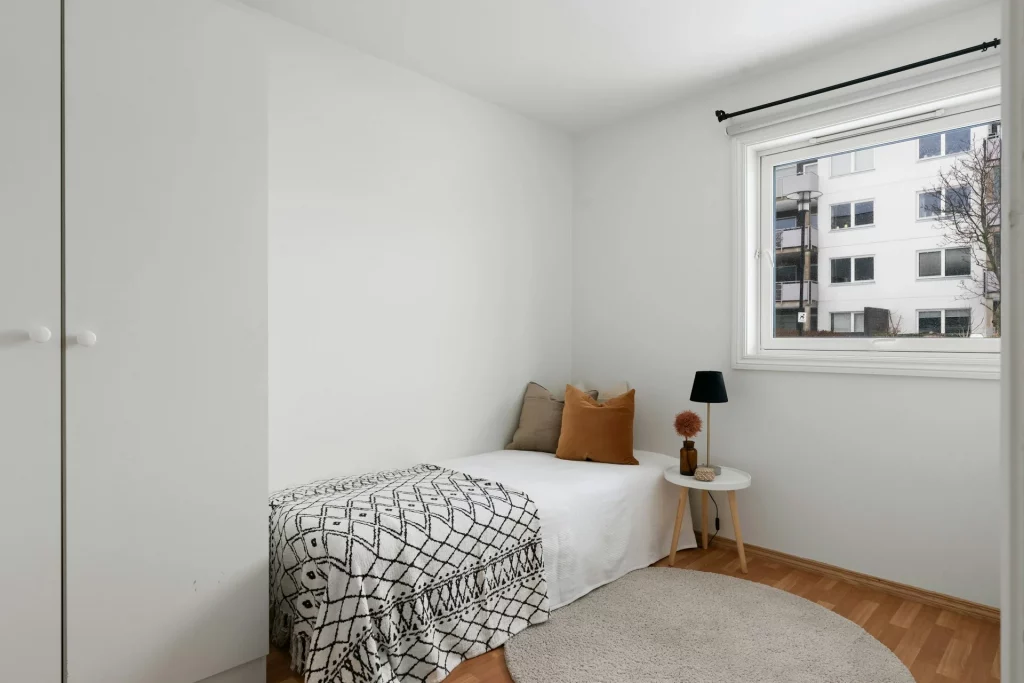
Housing in Madrid must comply with multiple habitability conditions that go beyond mere sleeping spaces: adequate usable area, natural ventilation and lighting, clear heights, functional distribution of rooms and hygienic-sanitary requirements are elements that make up a decent and legal home.
When planning an architectural project, whether it is a new construction or a renovation, having these criteria clear from the beginning avoids surprises, cost overruns and legal problems.
Like architects in Madridwe have an integral team, made up of technical architects and specialists in new construction who know and comply with all the regulations of habitability.
If you want to build a house from scratch o renovate a house structurally, contact us and ask for your budget without obligation.
Frequently Asked Questions
1. Do all homes in Madrid have to meet the same requirements?
In general, yes. New dwellings or those resulting from a change of use are obliged to comply with the current conditions (minimum 40 m², ventilation and corresponding facades). Existing dwellings may retain their status as long as no works are carried out that significantly modify their use or structure.
2. What happens if a home does not meet these conditions?
If it does not comply, it cannot obtain the u003Cstrongu003Efirst occupancy licenseu003C/strongu003E or connect basic services such as water, electricity or gas, which prevents its use as a legal dwelling.
3. Do habitability conditions only affect new housing?
No. They are also relevant in renovations and even in sales or rental negotiations, as they guarantee minimum standards of comfort and legality.
Is it legal to live in a small studio of less than 40 m²?
In some exceptional cases it may exist, but for new construction or change of use the 40 m² standard is normally required. Studios may exist if they are part of pre-existing situations and their distribution is not reformed without complying with the regulations.