At Fran Cortés Architects we work every day in the design and construction of single-family houses, both traditional as well as prefabricated concrete houses. So when someone asks us if it is really worth betting on a prefabricated house in Spain, our answer is always the same: it depends on the project and your priorities.
Prefabricated houses have evolved tremendously in recent years. Today they can offer features and designs that match – and even surpass – traditional systems. However, like any type of housing, they have strengths and limitations that should be evaluated before making a decision.
Here are the pros and cons based on our experience as an architectural firm specializing in new construction, home design and construction of modern single-family homes.
Advantages of prefabricated houses
Before deciding whether a prefabricated house is the best option, it is important to understand what real benefits this system offers. These are the most important advantages that we see in our day-to-day projects.
Faster execution times
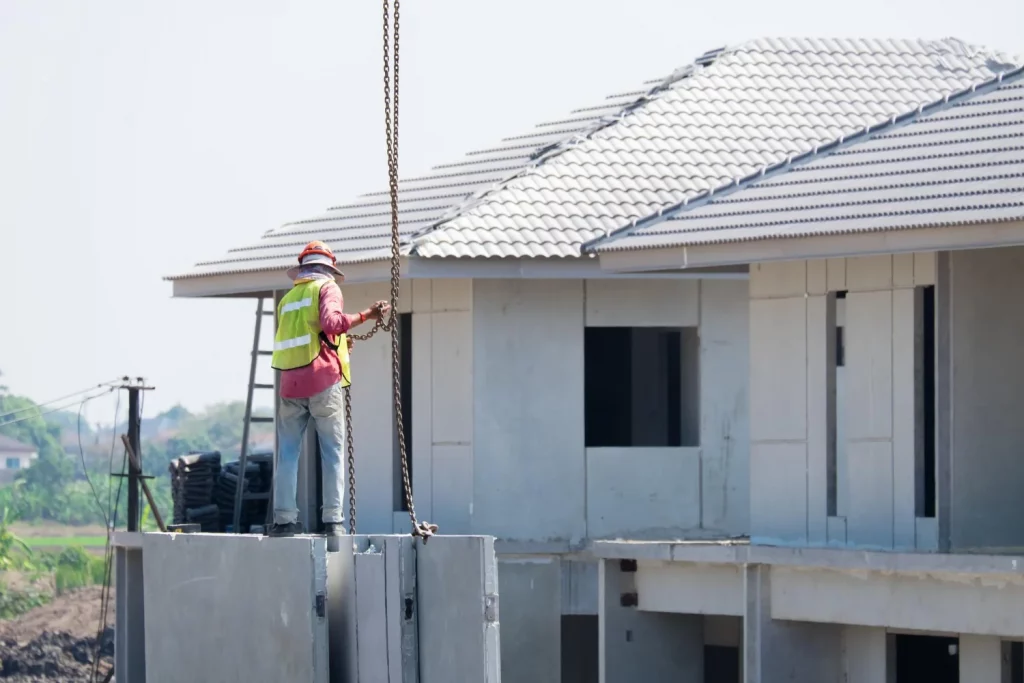
In-shop fabrication reduces construction time, avoids weather delays, and delivers turnkey prefabricated houses more stable deadlines. In many cases, we are talking about 4 to 8 months.
Increased quality control
Because they are produced in controlled environments, precast concrete houses and other industrialized systems have more uniform finishes and fewer deviations on site.
3. Financial savings and better budget forecasting
Although they are not always cheaper, it is true that industrialization reduces unforeseen events. For those who are looking to plan the price of a single-family home, this system provides economic stability.
4. Sustainability and energy efficiency
Prefabricated housing tends to generate less waste and allows the incorporation of highly efficient solutions from the initial design: continuous insulation, high performance carpentry, airtightness, etc.
5. Customized and adaptable design
Although it may seem otherwise, prefabricated single-family homes can be customized in layout, style and finishes. From minimalist homes to new construction projects to the most unique new construction projects.
Disadvantages of prefabricated houses
Although prefabricated houses offer many advantages, they also have certain limits that are important to assess before starting a project.
Reduced flexibility during construction
Improvised changes are more limited than in traditional construction. The project must be well defined from the beginning.
2. The need for a suitable and well-studied terrain
Truck and crane access, as well as proper foundations, are key. On sites with steep slopes or difficult access, the budget can go up.
3. They are not always more economical
Precast concrete houses offer high quality, but their price can match or exceed that of a traditional building if premium finishes are sought.
4. Dependence on the manufacturer
Each construction system is specific to a supplier. This implies adjusting to their catalogs, times and availability.
When do we recommend a prefabricated house?
In our experience, this type of housing works very well in projects where it is sought after:
- Tight schedule and clear planning.
- Highly efficient housing.
- Modern design and contemporary materials.
- Turnkey solutions with less uncertainty.
In contrast, a traditional home is often more suitable when the plot has technical complications or when an extreme level of customization is desired.
Frequently Asked Questions
What is the price of a prefabricated concrete house in Spain?
It depends on the surface, design and finishes, but in Spain they usually start from u003Cstrongu003E1,200-1,800 €/m²u003C/strongu003E, and can exceed 2,000 €/m² in premium models. You can see the estimated prices in more detail here: u003Cstrongu003Eu003Ca href=u0022https://francortesarquitectos.com/en/prefabricated-concrete-houses/u0022 target=u0022_blanku0022 rel=u0022noreferrer noopeneru0022u003Ewhat is the price of a prefabricated concrete house?u003C/au003Eu003C/strongu003E
Does the price of a manufactured home include the land?
No. Land and urban development procedures are always separate.
Are prefabricated houses strong and durable?
Yes, precast concrete houses have the same durability as a traditional house and comply with the Technical Building Code.
Can I customize the design of a prefabricated house?
With our architectural firm, yes. We are architects specialized in custom home design. Whether you opt for a traditional single-family home or a prefabricated single-family u003Cstrongu003Eu003Ca href=u0022https://francortesarquitectos.com/en/prefabricated-concrete-houses/u0022 target=u0022_blanku0022 rel=u0022noreferrer noopeneru0022u003Eprefabricated single-family houseu003C/au003Eu003C/strongu003Ewe customize it for you.
5. How long does it take to build prefabricated houses?
Between 6 and 10 months from the start of shop fabrication, depending on the system.
6. Do prefabricated houses require a building permit?
Yes, prefabricated houses are permanent dwellings and therefore require a u003Cstrongu003Esingle-family housing projectu003C/strongu003E and a municipal license.
Are prefabricated houses more efficient than traditional ones?
In general, yes. Industrialized construction allows detailed control of insulation, joints and thermal bridges.